
WHEN YOUR CASE REQUIRES MORE THAN ORDINARY PRISON CONSULTING
Specialized guidance for clients and their attorneys in sensitive, high-profile, and complex federal cases.

You may not have heard of me because I don’t try to be everything to everyone. I work with defendants, families, and defense attorneys facing sensitive, high-profile, and complex federal prison cases that require specialized experience and practical insight.
Attorneys understand the law. My role is to address the prison issues that arise before sentencing and continue long after it. That includes preparing clients with sensitive offenses to enter prison safely, identifying PSR language that could affect designation, understanding SOMP and sex offender treatment issues, and addressing protective custody concerns before they become real problems.
Not every federal prison case requires specialized consulting. But when the stakes are unusually high, ordinary prison consulting isn’t enough.
Connect with me:
How I Help
Prison Strategy for Sensitive and High-Profile Cases
Preparing for federal prison involves dozens of decisions that can affect a client’s safety and daily life. I help clients and defense attorneys evaluate protective custody options, review PSR language for potential prison implications, understand SOMP and sex offender treatment requirements, prepare for designation, and develop a plan for entering federal prison safely and with realistic expectations.
Family Guidance and Crisis Planning
Families often face the same uncertainty as the defendant. I help families understand what to expect before sentencing, during incarceration, and after release, including preparing for designation, responding to prison emergencies, and separating fact from rumor during one of the most stressful periods of their lives.
Reentry and Supervised-Release Strategy
Release from prison is the beginning of a new phase, not the end of the process. I help clients pursue early termination of supervised release, understand and comply with release conditions, address registration-related concerns, overcome housing and employment obstacles, and develop practical strategies for long-term success after federal custody.
Federal Post-Conviction Consulting
Federal post-conviction work often requires more than filing motions. I assist clients and attorneys with case organization, issue identification, legal research support, and strategic preparation for post-conviction litigation. My role is to help ensure that important issues are identified, organized, and presented as effectively as possible.
Latest blog posts
In-Depth Insights
Practical analysis on federal custody, sentencing, post-conviction trends, and supervised-release issues, written for defendants, families, and attorneys who want clear, accurate information.
-
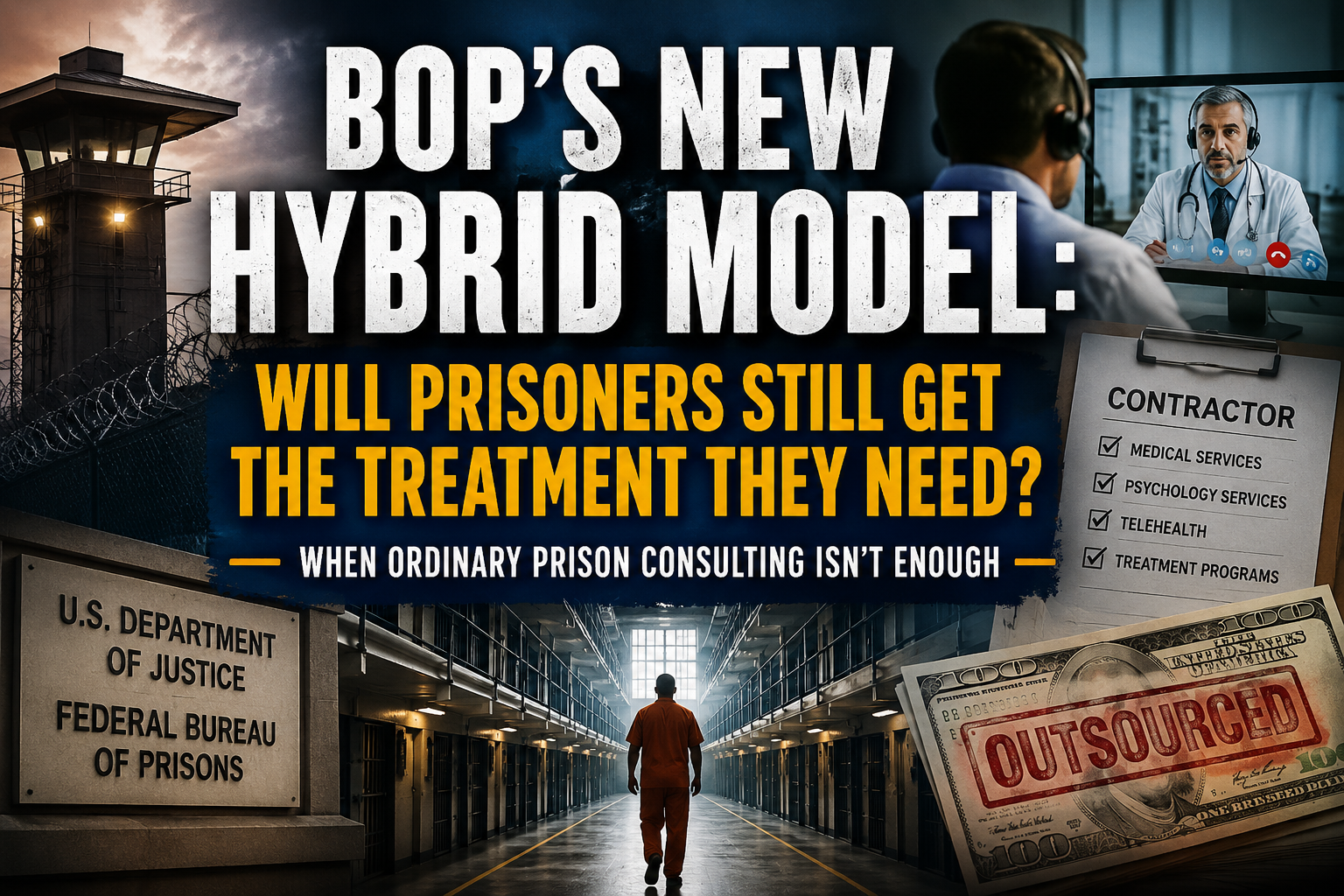
The BOP Is Building a Hybrid Prison System. Will Its Growing Sex Offender Population Get the Treatment and Medical Care It Needs?
The Federal Bureau of Prisons is asking Congress for more than $10.3 billion for fiscal year 2027. (read the budget request here) The agency says the money will improve staffing, medical care, psychology services, programming, technology, reentry, and institutional safety. But the BOP’s budget request must be considered alongside its apparent move toward a hybrid…
-
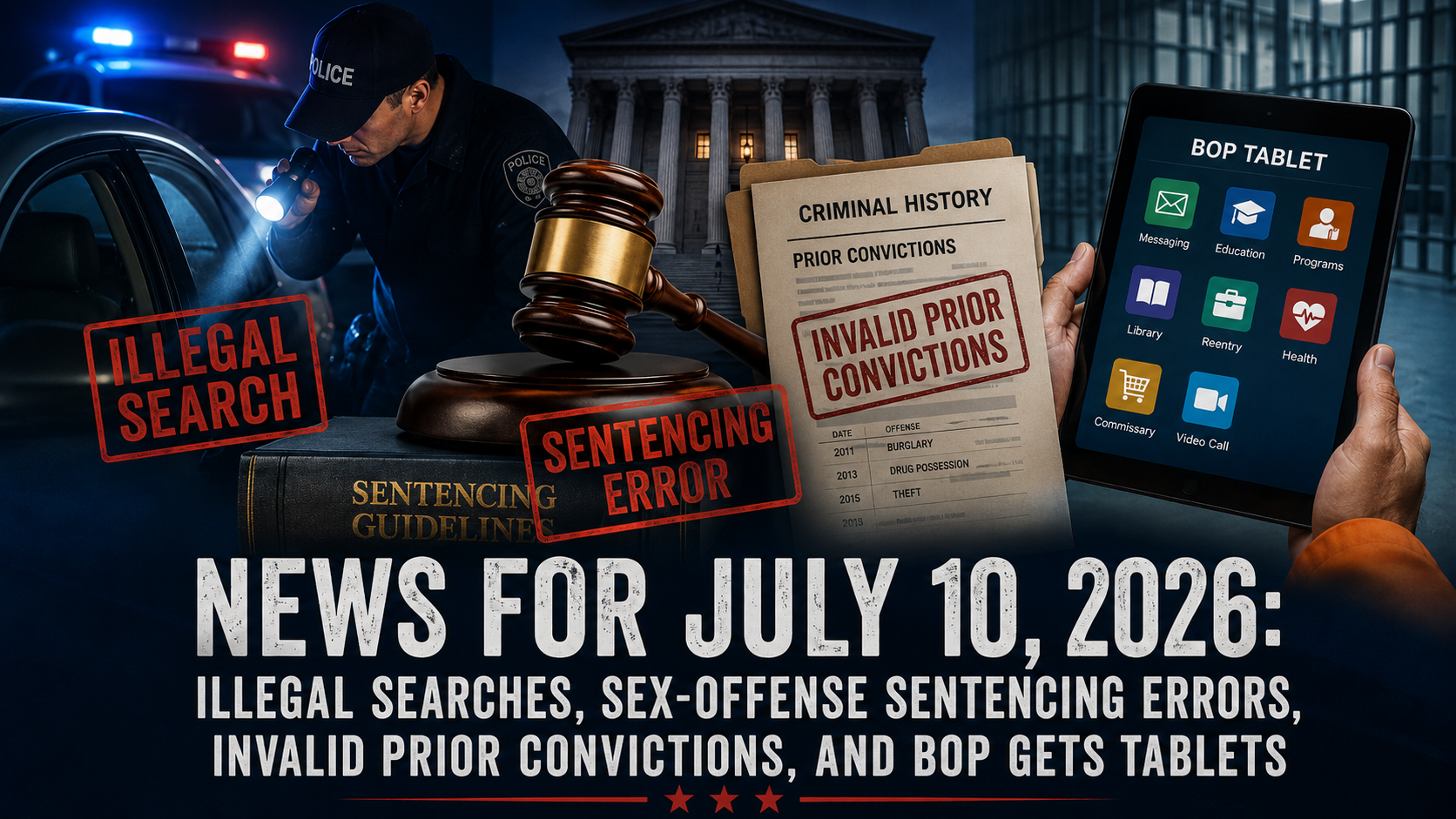
News for July 10, 2026: Illegal Searches, Sex-Offense Sentencing Errors, Invalid Prior Convictions, and BOP Gets Tablets
This week’s newsletter covers several favorable federal court decisions and developments affecting sentencing, convictions, and post-conviction relief. As always, the goal is to keep readers informed about important legal rulings that may impact ongoing cases, appeals, and future challenges in federal court. United States v. Martinez, 2026 U.S. App. LEXIS 19808 (7th Cir. July 7,…
-
Introducing Facing Federal Prison
Why I Switched my Brand to Facing Federal Prison People facing federal prison don’t need fear-based marketing, rumors, or consultants who have never been in their shoes. They need real guidance from someone who understands both sides of the problem: the legal issues that brought them into the system, and the reality of what happens…
-
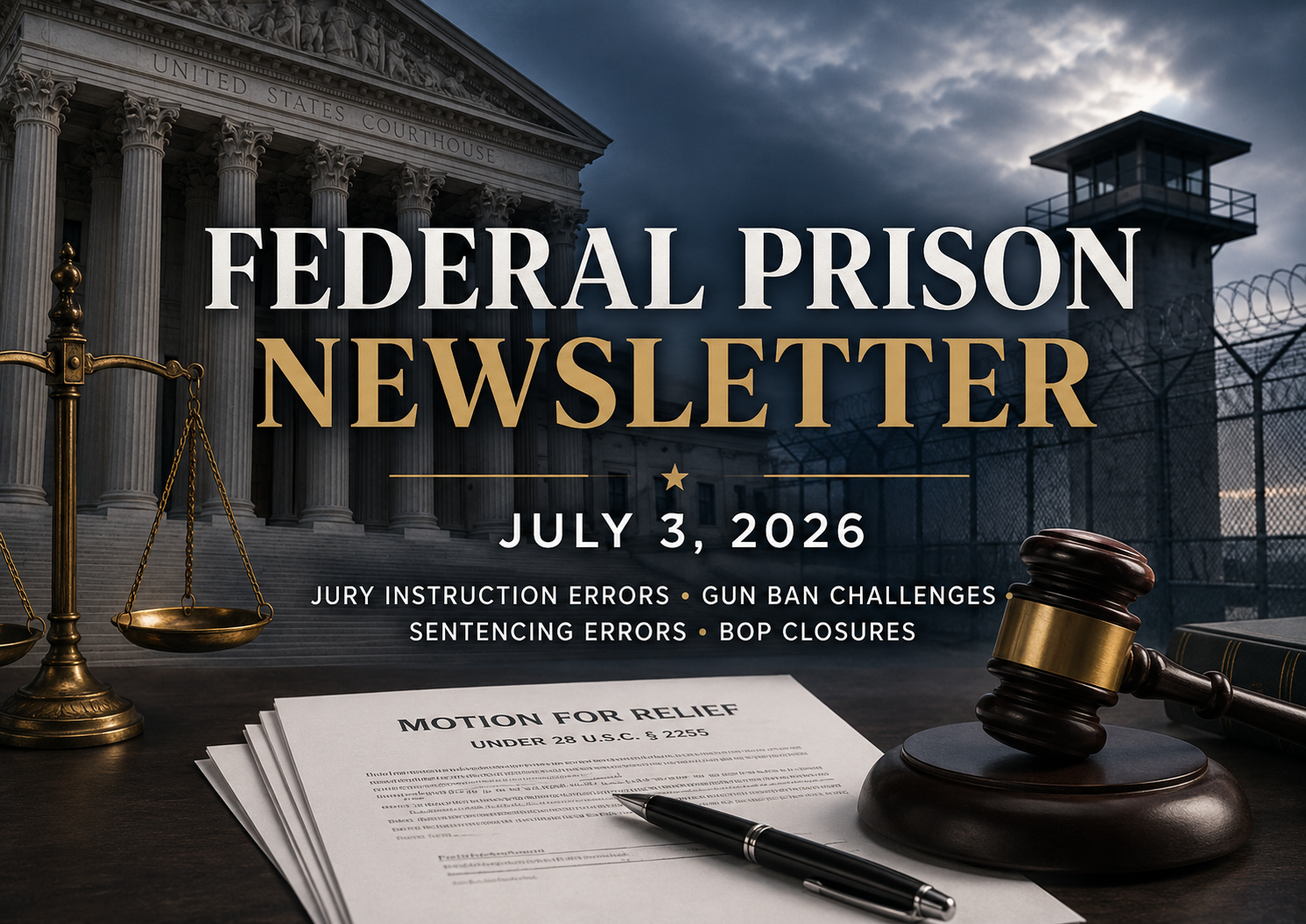
News for July 3, 2026: Murder Convictions Vacated, Gun Ban Limits, Sentencing Errors, and BOP Closures
This week’s newsletter covers several favorable federal court decisions and developments affecting sentencing, convictions, and post-conviction relief. As always, the goal is to keep readers informed about important legal rulings that may impact ongoing cases, appeals, and future challenges in federal court. United States v. Lynn, 2026 U.S. App. LEXIS 19026 (10th Cir. June 30,…
-

Federal Prison Investigator Accused of Smuggling Contraband for Cash
Michael Popma, a Bureau of Prisons Special Investigative Service Lieutenant at FCC Florence, has been indicted in federal court in Colorado. According to the indictment, Popma allegedly accepted cash and other things of value in exchange for helping bring contraband into the federal prison camp at Florence. The government says the contraband included approximately 123…
-
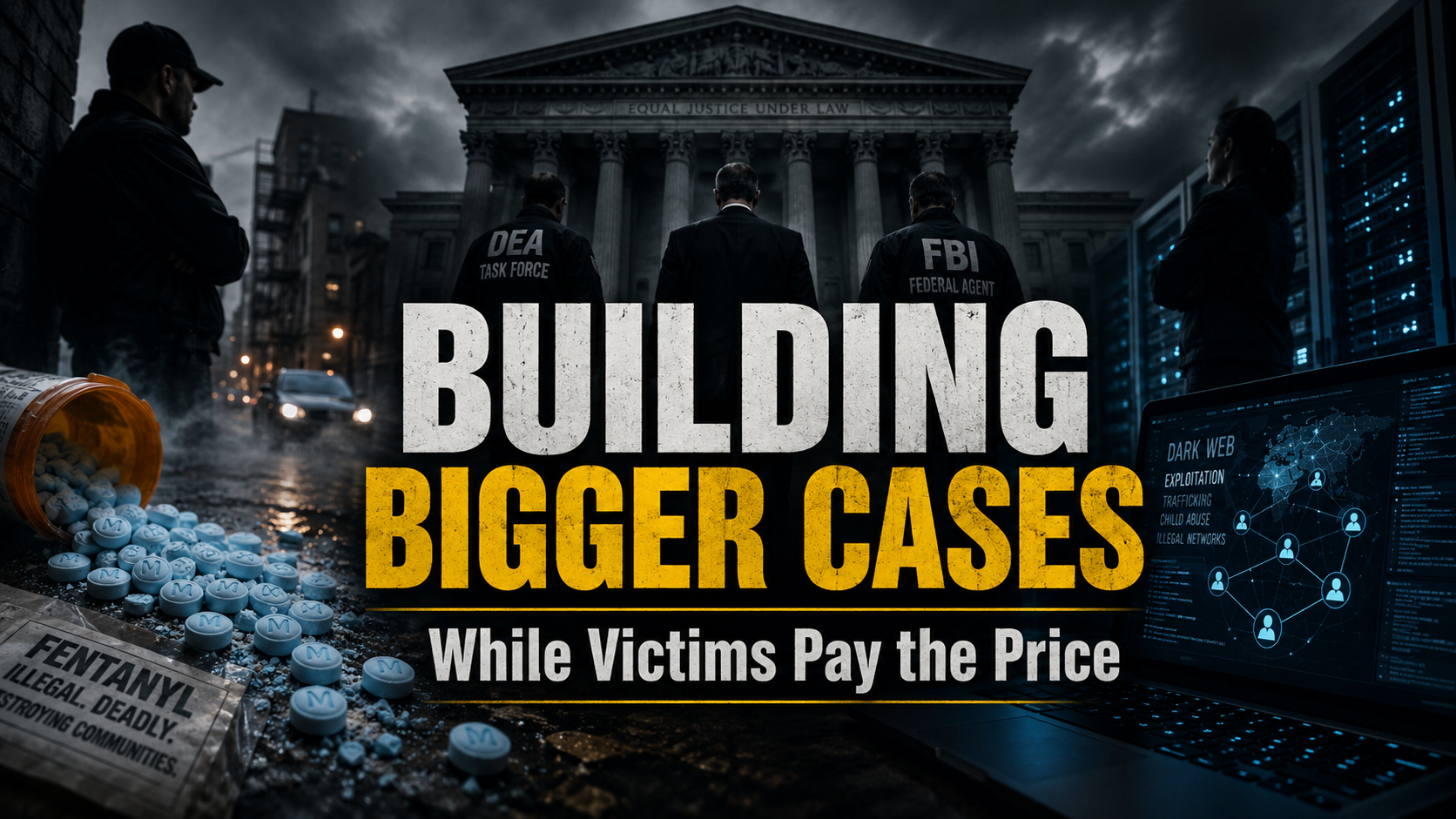
Building Bigger Cases While Victims Pay
The Government Isn’t Just Prosecuting Bigger Cases. It’s Building Them While Victims Pay the Price. The federal government loves to say it only gets involved in “big cases.” That sounds reasonable on paper. Nobody expects federal agents and federal prosecutors to take every street-level drug case, every low-level internet case, or every local crime that…
-

News for June 19, 2026: New 2255 Paths, Appeal Waiver Limits, Gun Ban Challenges, and Sentencing Role Errors
This week’s newsletter covers several favorable federal court decisions and developments affecting sentencing, convictions, and post-conviction relief. As always, the goal is to keep readers informed about important legal rulings that may impact ongoing cases, appeals, and future challenges in federal court. Hunter v. United States, 2026 U.S. LEXIS 2558 (U.S. June 18, 2026) Miscarriage…
-

How the BOP’s Grievance System Prevents Staff from Being Held Accountable
When someone in federal prison is denied medical care, abused by staff, denied basic accommodations, or subjected to unsafe conditions, the official answer is always the same: File an administrative remedy. That sounds reasonable, until you understand how the Bureau of Prisons actually uses that system. The administrative remedy process is supposed to give prisoners…
-
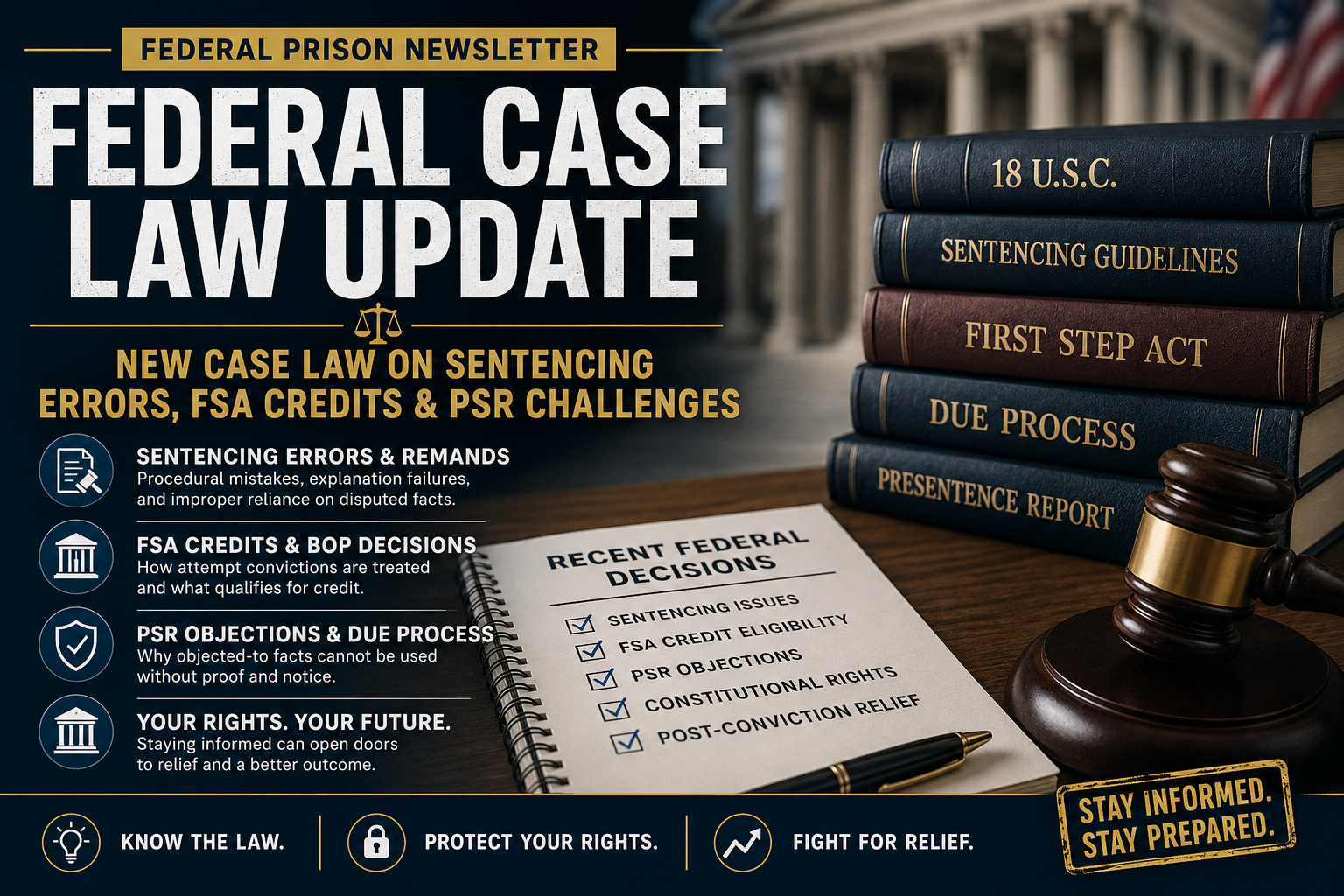
News for June 15, 2026: FSA Credit Errors, Sentencing Limits, and PSR Challenges
This week’s newsletter covers several favorable federal court decisions and developments affecting sentencing, convictions, and post-conviction relief. As always, the goal is to keep readers informed about important legal rulings that may impact ongoing cases, appeals, and future challenges in federal court. United States v. McKenzie, 2026 U.S. App. LEXIS 17136 (1st Cir. June 12,…