
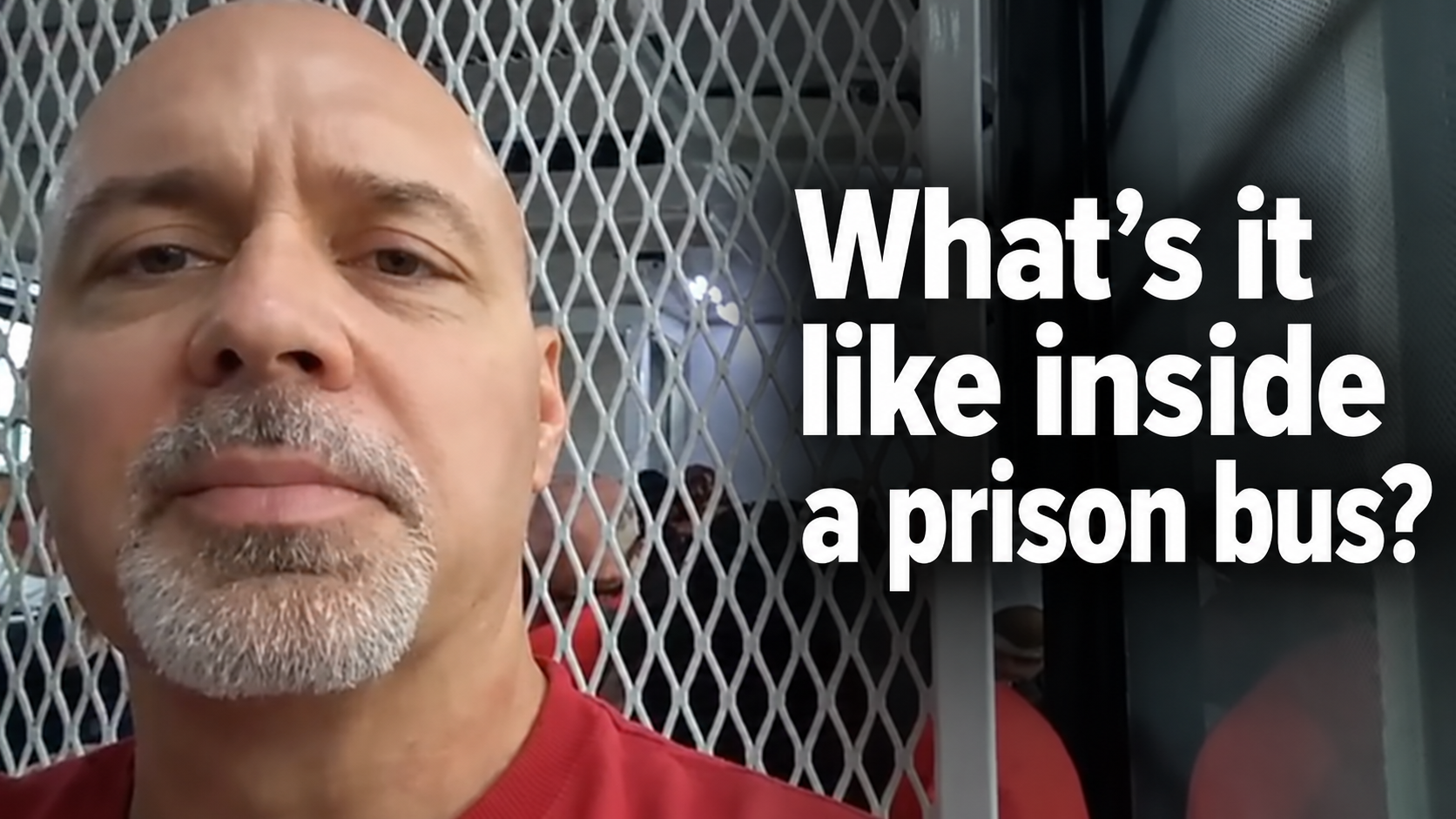
Most people will never see the inside of a prison transport bus. This video provides a rare look inside one, including the steel cage used to separate high-risk prisoners from everyone else.
I recorded the video on September 27, 2022, while the Bureau of Prisons was evacuating us from a halfway house in Tampa because of Hurricane Ian. We were transported several hours away to a GEO-owned private, for-profit, prison in Alabama that was being used as an emergency shelter.
This was an unusual trip. We came from a halfway house, wore our regular clothes, carried our cell phones, and were not restrained. Once we reached the prison, we could walk around inside while still wearing our normal clothing and carrying our phones.
Those circumstances gave me a rare opportunity to record the inside of a prison bus.
The lack of restraints also makes it easier to see how cramped the bus was. The hard plastic seats were so small and packed so closely together that a normal-sized man could barely fit. We spent hours pressed against one another with almost no room to move.
During an ordinary prison transfer, every person on that bus would also be wearing handcuffs, a waist chain, and heavy ankle restraints.
How Prisoners Are Restrained During Transportation
A prisoner does not simply sit on a bus with handcuffs around his wrists.
The handcuffs attach to a chain locked around his waist. That chain holds his hands close to his body and prevents him from raising or extending his arms normally.
Large metal restraints lock around his ankles. A short chain connects them and forces him to take small, shuffling steps. The cuffs are heavy and painful. They dig into the ankles while the prisoner walks, stands, and sits for hours.
Higher-custody prisoners also wear a black box. The rigid box fits over the handcuffs and locking mechanism. It locks the wrists into position and prevents the prisoner from moving his hands or bringing them toward his mouth.
I was classified at a low custody level, so I did not require a black box. Higher-custody prisoners are black-boxed. Private prison companies such as CoreCivic and GEO automatically black-box everyone on some transports.
The black box turns an already uncomfortable restraint system into something much worse. Eating becomes impossible. Drinking requires another person’s help. Adjusting clothing becomes extremely difficult. Using the bathroom becomes humiliating.
Staff Give You Food You Cannot Physically Eat
Staff hand each prisoner a small box of food for the trip. It resembles a basic packaged lunch, with individually wrapped items and a small bottle of water.
The restraints keep your hands locked near your waist. You cannot open most of the packaging or lift the food to your mouth. The food sits in your lap while the bus continues down the road.
A black box eliminates the limited wrist movement that remains. A black-boxed prisoner cannot raise the food or water to his mouth.
Handing a fully restrained prisoner a box of food feels like a cruel joke. Staff provide a meal that the prisoner’s restraints prevent him from opening or eating.
Without a black box, I could hold a water bottle close to my waist, catch the opening with my mouth, and tilt the bottle upward. That was the only practical way to drink.
A prisoner wearing a black box cannot do that. During one trip, I held a bottle of water to another prisoner’s mouth because his restraints made it impossible for him to drink by himself.
Most prisoners skip the food and water completely. The trip usually lasts several hours, but eating and drinking create another problem: using the bathroom while chained.
The Bathroom at the Back of the Bus
Prison buses usually have a small toilet area in the rear. Having a toilet on board sounds adequate until you try to use it while wearing wrist restraints, a waist chain, and ankle shackles.
The waist chain holds your hands too close to your body to manage your clothing normally. The ankle chain prevents you from spreading your feet or maintaining your balance while the bus moves.
A man can urinate, but he cannot properly position himself or control his clothing. Urine runs down the front of his clothes, and he spends the rest of the trip sitting in it.
Defecating and cleaning yourself while wearing those restraints is essentially impossible.
That is why most prisoners avoid drinking before and during transportation. They choose dehydration over trying to use that toilet while chained.
The Steel Cage Inside the Bus
The video shows a steel cage inside the bus. Transportation staff use these secure compartments to separate prisoners they classify as high risk.
I sat inside the cage during this trip, although it was not locked. I chose that area because nobody else wanted to sit there. I thought sitting in the cage would leave me with an empty seat beside me.
It did not work. Staff assigned people to specific seats and filled the available space.
Near the end of the video, the camera moves far enough forward to show more of the cage. I blurred one man’s face to protect his identity, but the footage still shows the steel mesh and the restricted space inside the compartment.
During an ordinary transfer, a prisoner placed inside that cage remains fully restrained. He sits behind steel mesh with his wrists cuffed to his waist and his ankles chained together.
BOP Buses Versus Private Prison Buses
The bus shown in this video was operated by a private prison company. Bureau of Prisons buses are a little larger and have wider seats. They also usually have air conditioning.
The additional space does not make a BOP trip comfortable. Prisoners still spend hours sitting in hard seats while wearing handcuffs, waist chains, and ankle restraints. They still struggle to eat, drink, and use the bathroom.
Private transportation is often worse. Some private buses lack working air conditioning. The bus in this video became extremely hot. Prisoners were packed closely together with limited airflow and almost no room to move.
Heat, dehydration, metal restraints, cramped seating, and hours on the road combine to make prison transportation physically exhausting and painful.
Arriving at the Prison
A prison bus usually pulls into a secured garage or enclosed vehicle entrance at the institution. The outside door closes behind the bus before staff begin unloading the prisoners.
The prisoners step off the bus inside the secure area and walk directly into the prison. Their hands remain cuffed to their waist chains, and their ankles remain shackled.
Some prisons do not have an enclosed garage. At those institutions, prisoners step off the bus outdoors and shuffle across a parking lot or receiving area while guards point guns at them.
The ankle chain makes every step short and awkward. The prisoner has to move slowly, follow shouted commands, maintain his balance, and avoid falling while officers watch him through their gun sights.
Why This Trip Looked Different
The people shown in this video were still in BOP custody, but we were living at a halfway house when Hurricane Ian threatened the Tampa area.
The BOP evacuated us to a prison in Alabama. Because this was an emergency evacuation from community confinement, we wore ordinary clothes, carried our phones, and traveled without restraints. In fact, they called me back to the halfway house from my office job, and I drove my car to the halfway house only to be loaded onto a prison bus.
That explains why the video looks so different from an ordinary prisoner transfer. It also allowed me to record details that almost nobody outside the system ever sees.
The physical design remains the same: hard plastic seats, almost no legroom, steel mesh, a security cage, and bodies packed closely together for hours.
To understand an ordinary transport, add handcuffs connected to a waist chain, heavy cuffs around both ankles, a short chain forcing every prisoner to shuffle, and a black box locking the wrists of higher-custody prisoners into place.
Then add a box of food the prisoner cannot open, a bottle of water he cannot raise to his mouth, and a toilet he cannot use properly.
That is what prison transportation is really like.
Prison Transportation Requires Preparation
Transportation is one of the parts of federal prison that defendants and families rarely hear about before it happens.
A prisoner can spend hours or days in transit while moving to his designated institution, transferring between prisons, attending court, receiving medical treatment, or passing through federal transfer centers and county jails.
The trip involves much more than sitting on a bus. It means surrendering all control over movement, food, water, bathroom access, temperature, seating, and personal space while wearing painful restraints.
Preparation helps a person understand what is coming, plan for the physical demands, and avoid preventable problems. It also gives families an accurate picture of what their loved one experiences during a transfer.
I help people facing federal prison and their families prepare for these realities—from surrender and transportation through designation, safety, daily prison life, and eventual release.
The goal is simple: no one should enter the federal prison system blind.

Dale Chappell prepares people in sensitive, high-profile, and high-stakes federal cases for prison. He works with clients, families, and attorneys during pretrial, throughout incarceration, and during the transition to halfway house placement, home confinement, and supervised release.
Dale brings more than 17 years of experience, firsthand knowledge of the federal prison system, and experience testifying at high-profile public hearings on prison and criminal justice issues. He helps clients protect their safety and privacy, avoid decisions that can follow them throughout their sentences, and prepare for the strongest possible outcome at every stage.
Dale has written nearly 600 published articles on federal prison, post-conviction, and criminal justice issues.
Have questions?
Contact Dale directly at dale@facingfederalprison.com.

Leave a Reply