
WHEN YOUR CASE REQUIRES MORE THAN ORDINARY PRISON CONSULTING
Specialized guidance for clients and their attorneys in sensitive, high-profile, and complex federal cases.

You may not have heard of me because I don’t try to be everything to everyone. I work with defendants, families, and defense attorneys facing sensitive, high-profile, and complex federal prison cases that require specialized experience and practical insight.
Attorneys understand the law. My role is to address the prison issues that arise before sentencing and continue long after it. That includes preparing clients with sensitive offenses to enter prison safely, identifying PSR language that could affect designation, understanding SOMP and sex offender treatment issues, and addressing protective custody concerns before they become real problems.
Not every federal prison case requires specialized consulting. But when the stakes are unusually high, ordinary prison consulting isn’t enough.
Connect with me:
How I Help
Prison Strategy for Sensitive and High-Profile Cases
Preparing for federal prison involves dozens of decisions that can affect a client’s safety and daily life. I help clients and defense attorneys evaluate protective custody options, review PSR language for potential prison implications, understand SOMP and sex offender treatment requirements, prepare for designation, and develop a plan for entering federal prison safely and with realistic expectations.
Family Guidance and Crisis Planning
Families often face the same uncertainty as the defendant. I help families understand what to expect before sentencing, during incarceration, and after release, including preparing for designation, responding to prison emergencies, and separating fact from rumor during one of the most stressful periods of their lives.
Reentry and Supervised-Release Strategy
Release from prison is the beginning of a new phase, not the end of the process. I help clients pursue early termination of supervised release, understand and comply with release conditions, address registration-related concerns, overcome housing and employment obstacles, and develop practical strategies for long-term success after federal custody.
Federal Post-Conviction Consulting
Federal post-conviction work often requires more than filing motions. I assist clients and attorneys with case organization, issue identification, legal research support, and strategic preparation for post-conviction litigation. My role is to help ensure that important issues are identified, organized, and presented as effectively as possible.
Latest blog posts
In-Depth Insights
Practical analysis on federal custody, sentencing, post-conviction trends, and supervised-release issues, written for defendants, families, and attorneys who want clear, accurate information.
-
Federal Habeas Corpus: Court Cannot Use Counsel’s Affidavit to Avoid Evidentiary Hearing Over Disputed Facts
Amaury Villa v. United States, 2023 U.S. App. LEXIS 12 (6th Cir. Jan. 3, 2023), __ F.4th __. Indicted in Florida and Connecticut, the defendant cooperated with prosecutors. Meanwhile, he was also indicted in Kentucky. The defendant was unaware of those charges when he pled guilty (represented by Attorney Perez) in the other cases. Those…
-
BOP Posts (Another) New Policy on First Step Act Credits
Almost four years after the First Step Act was enacted in December 2018, the Federal Bureau of Prisons has finally adopted a formal policy on how to implement this law passed by Congress that could potentially shorten the sentences of most BOP prisoners. In usual BOP style, the policy is long and complex — but…
-
Fifth Circuit Tosses Child Porn Conviction, Holds Image Wasn’t ‘Patently Offensive’
Whether a nude image of a minor is considered illegal depends on whether it’s “obscene.” But what does that mean? For decades, what has amounted to obscenity has never been clearly established by the courts. The Supreme Court did set some guidelines for obscenity cases – 50 years ago – but it still left the…
-
Federal Habeas Corpus: Raising Successful Habeas Claims
Criminal cases are chock full of errors. Judges err, prosecutors err, and of course defense lawyers are far from perfect. But when it comes to federal habeas corpus, not all errors are worth raising. Perhaps the most challenging part of federal habeas corpus might be coming up with claims worthy of arguing for relief. In…
-
Federal Habeas Corpus: Federal Prosecutors Argue in Supreme Court that Savings Clause Relief Should be Available
August 8, 2022: Jones v. Hendrix, No. 21-857 (S. Ct.) Even though the government has convinced some federal courts that relief under the savings clause should not even exist for prisoners under 28 U.S.C. § 2255, it has now changed its tune and argued in the Supreme Court that it was wrong and savings clause…
-
Free Power of Attorney Forms for Prisoners
If you need a power of attorney form, you don’t have to pay for them. Here’s a durable power of attorney form for Florida, and a revocation form when the time comes to end the power of attorney. I also included a generic power of attorney form that may be used in other states. Florida…
-
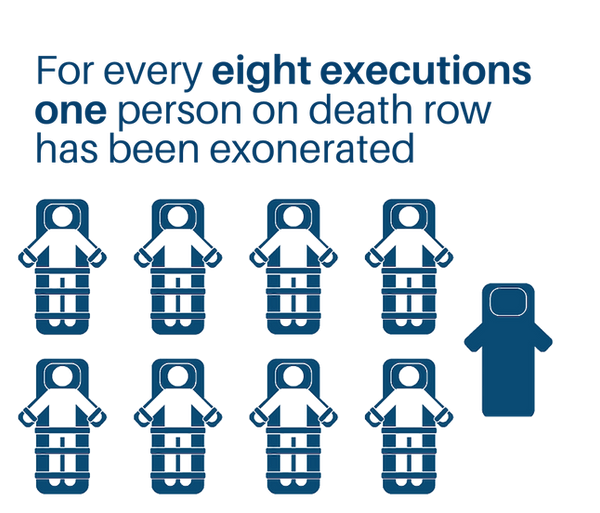
Ohio Plans to Execute a Man It Knows Is Innocent—Why?
(This post is a repost of an article by Prof. Sarat found here) I’ve been following Amherst Law Prof Austin Sarat’s posts on the Justia Verdict website for a while, and he always makes me stop and think with the topics he covers. While he often writes about problems with the death penalty, here’s a…
-
Doe v Swearingen: Federal Court Revives Lawsuit Against Florida’s Sex Offense Registry
Otober 21, 2022: Doe v. Swearingen, No. 21-10644 (11th Cir.) Reviving a lawsuit against Florida’s sex offender registry, the U.S. Court of Appeals for the Eleventh Circuit (overseeing the federal courts in Florida, Alabama, and Georgia) held on Friday that the federal district court in the Southern District of Florida’s dismissal of the lawsuit as…
-
Is Federal Supervised Release Unconstitutional?
A federal judge and several other law experts argued in a recent law review journal that the way federal supervised release works is unconstitutional. The big problem, they point out, is that someone can be thrown back in prison for years without ever being charged with a crime or given the protections normally given for…